The creative thread
Using the myths
Artists have been starting from these stories for nearly three thousand years. Here are the habits that keep recurring.
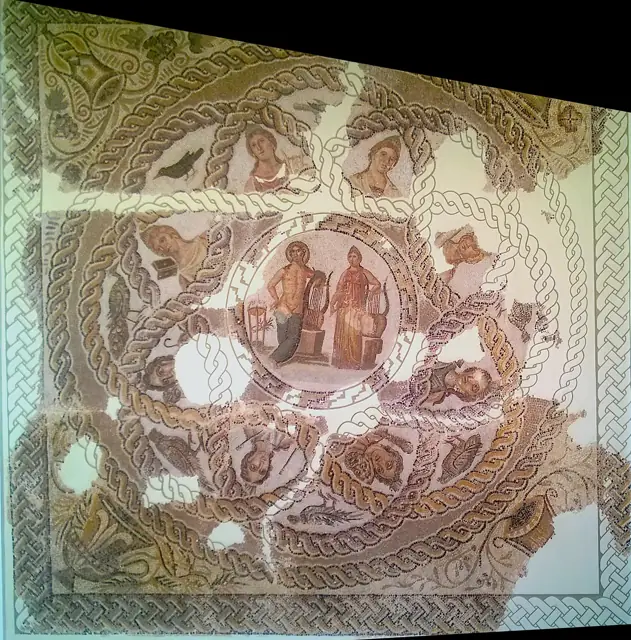

Ask the Muse first
The oldest habit is to begin by asking for help. The Odyssey opens with a request to the Muse to tell of the man of many turns, and in the third book of the Argonautica Apollonius of Rhodes calls on Erato before the love of Medea and Jason. The Muses are the daughters of Mnemosyne, Memory, so the habit has a built-in lesson: start from what you remember and what you have read.
Choose your version
There is no single text. Hesiod has Aphrodite rise from the sea foam, and Homer makes her the daughter of Zeus and Dione. Both are traditional. Retellers have always picked the version that serves them, so you can too, provided you know that you are choosing.
Retell it from the side
Many strong modern works take a minor figure's point of view. James Joyce built Ulysses (1922) on the structure of the Odyssey, and Madeline Miller's Circe (2018) tells the story of a daughter of Helios. Ovid's Metamorphoses, written about two thousand years ago, retold hundreds of myths as stories of change, and is still the usual source for them.
Take a figure as a type
Prometheus has been reused again and again: in Aeschylus's play, in Percy Shelley's Prometheus Unbound (1820), and in Mary Shelley's Frankenstein, subtitled The Modern Prometheus (1818). Each time the figure stands for a different kind of ambition and its cost.
Set it to music, or to movement
Monteverdi's opera L'Orfeo (1607) tells the story of Orpheus, whose mother is often said to be Calliope. Stravinsky's ballet Apollon musagète (1928) takes Apollo and three Muses as its subject.
Where to look next
Start with the family tree and pick a figure with an odd story. Every page on this site lists the ancient authors it draws on, so you can go straight to the source.